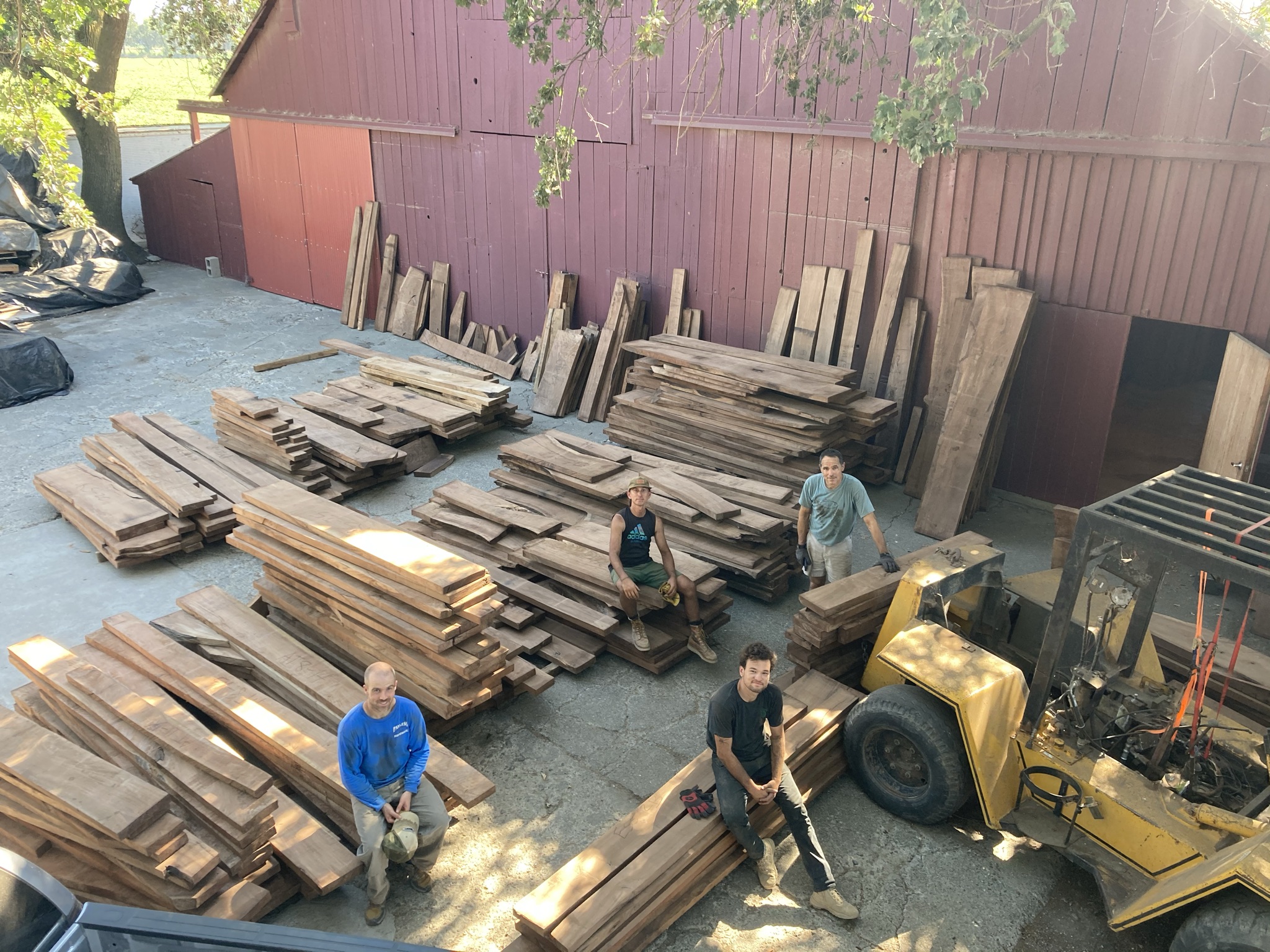
Wood Sourcing
Locally harvested and milled Claro Walnut from the Sacramento Valley.
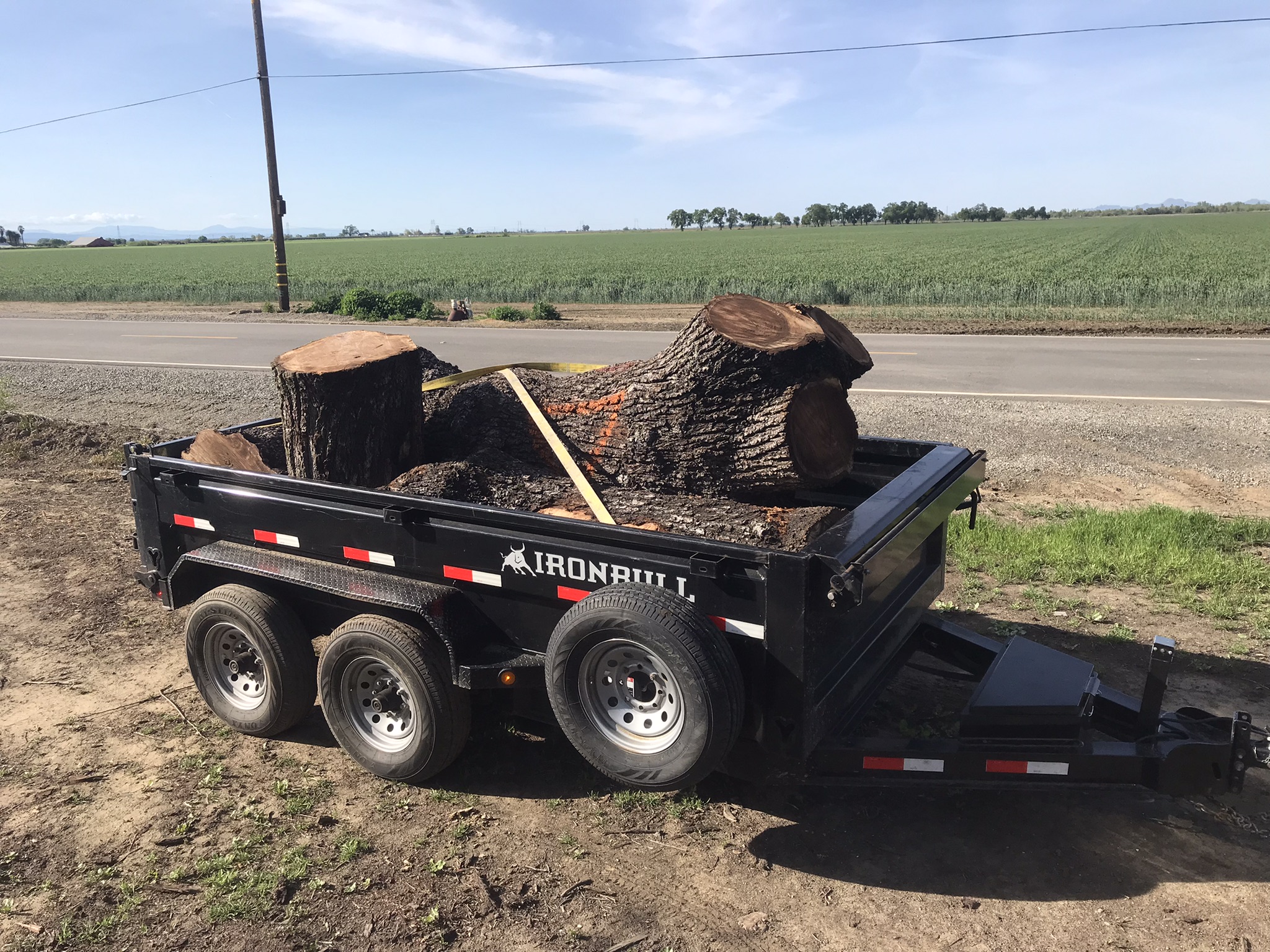
The walnut you see has been cut and milled locally from salvage logs sourced in the Sacramento Valley. We don't seek out wood to cut—landowners contact us to remove trees that would otherwise go to waste. Once milled, lumber is air-dried on site for up to two years before it's ready to work. The images that follow demonstrate the process that turns a tree into furniture.
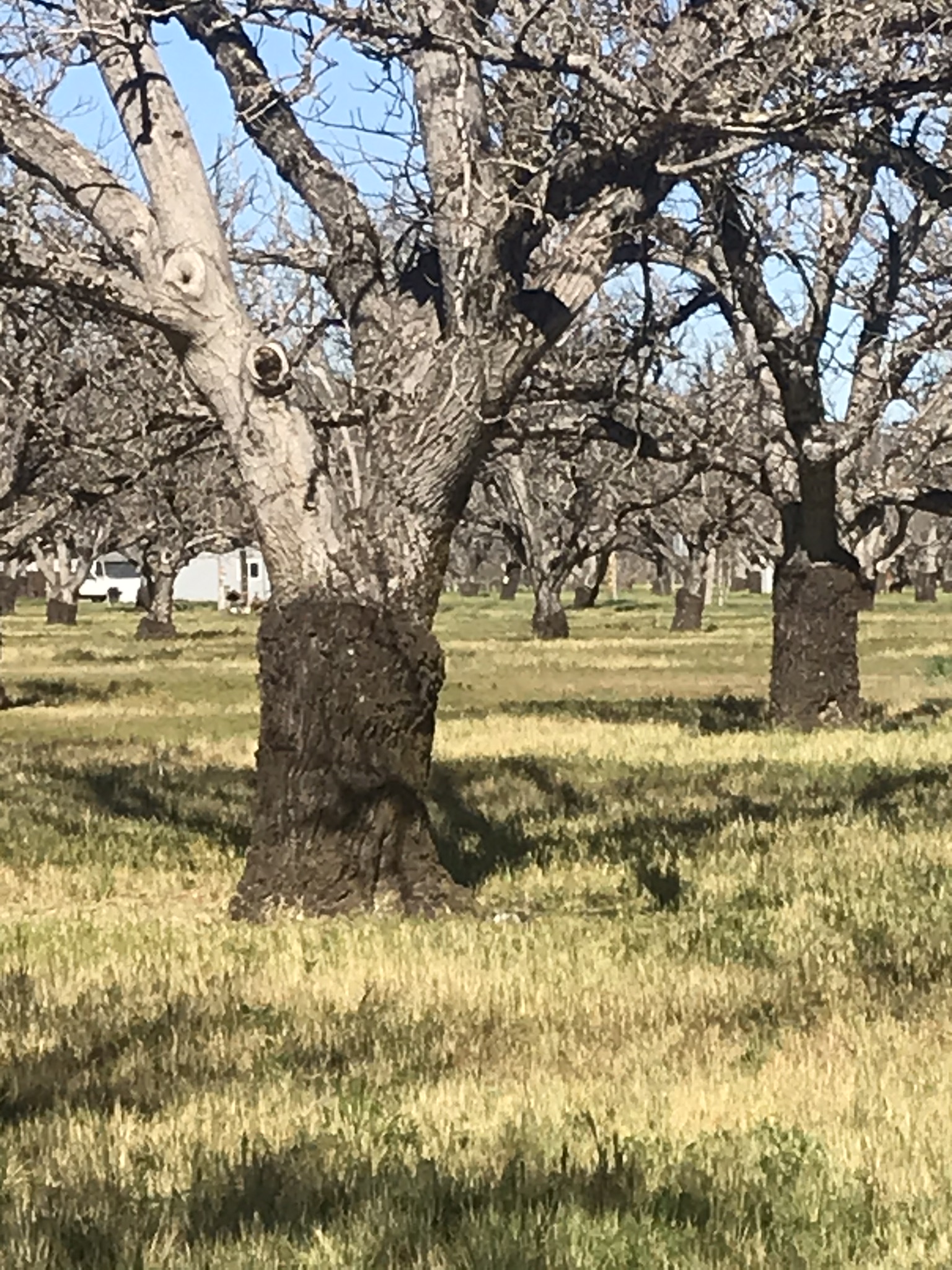
Every piece of lumber begins as a tree. In this case the native California Black Walnut (or Claro Walnut) has been used as root stock for the fruit producing English Walnut. This orchard is at the end of its life span. Normally these stumps would be put into a pile and burned. The most promising logs can be salvaged and milled into usable lumber.
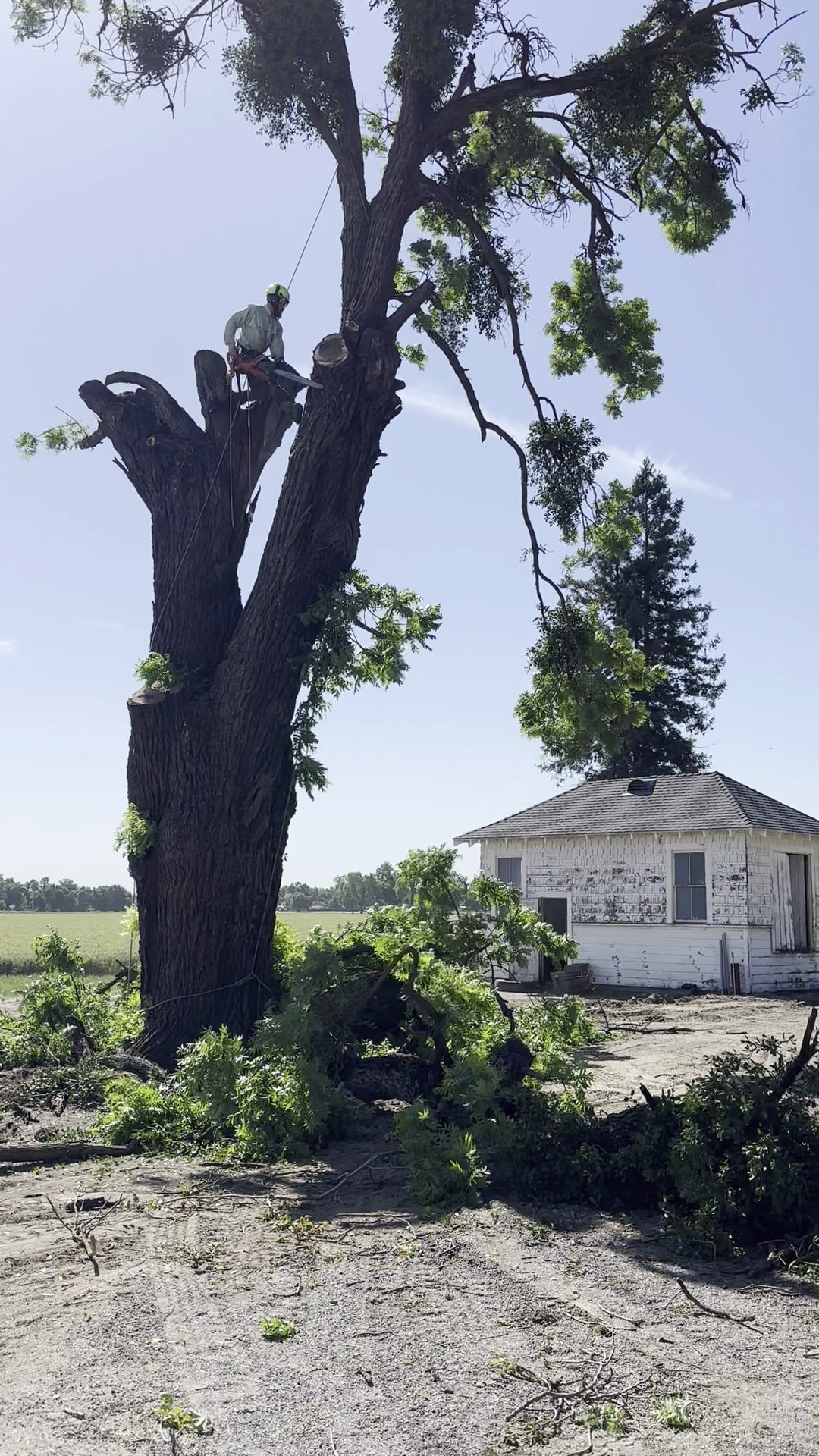
All of the black walnut I work with comes from the North Sacramento Valley. These are trees being removed by landowners — from yards, orchards, and woodlots. We don't seek out trees to cut down; instead, we work with wood that would otherwise be lost.
Once a tree is down, the logs need to be processed before they can go to the mill. This means bucking the log into sections — trimming to length, removing defects, and sizing each piece to fit on the sawmill. Getting this right determines how much quality wood can be recovered.
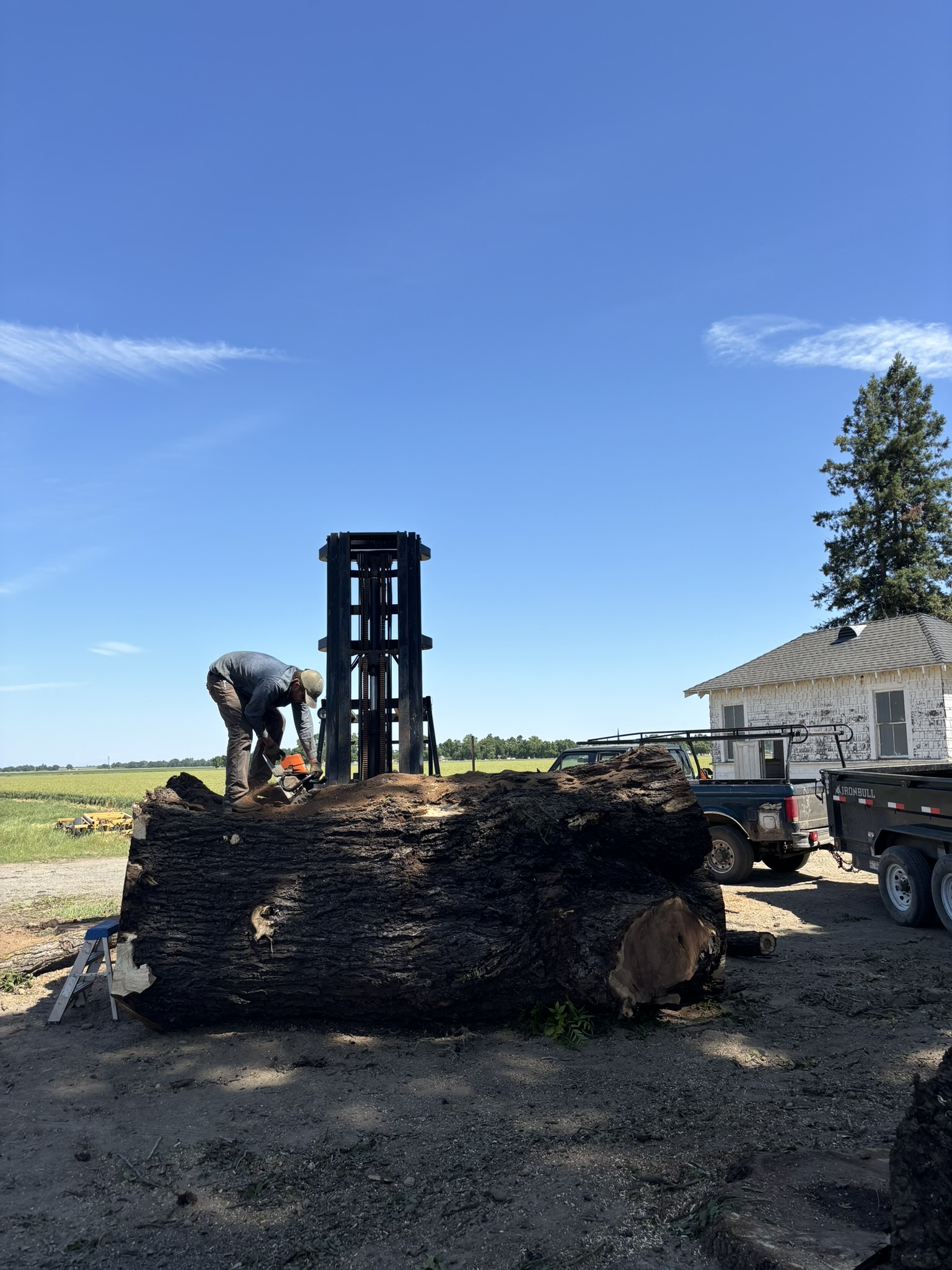
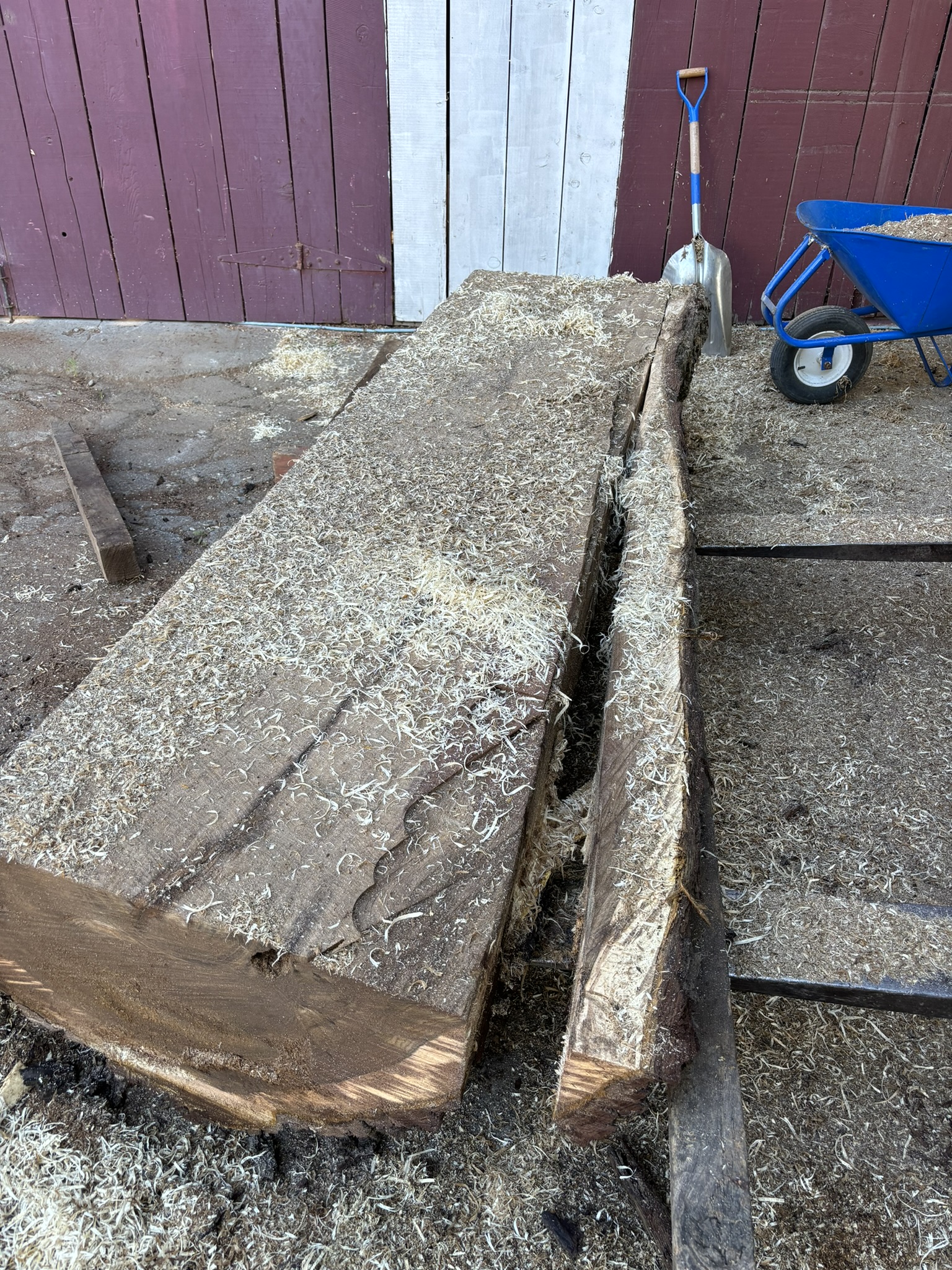
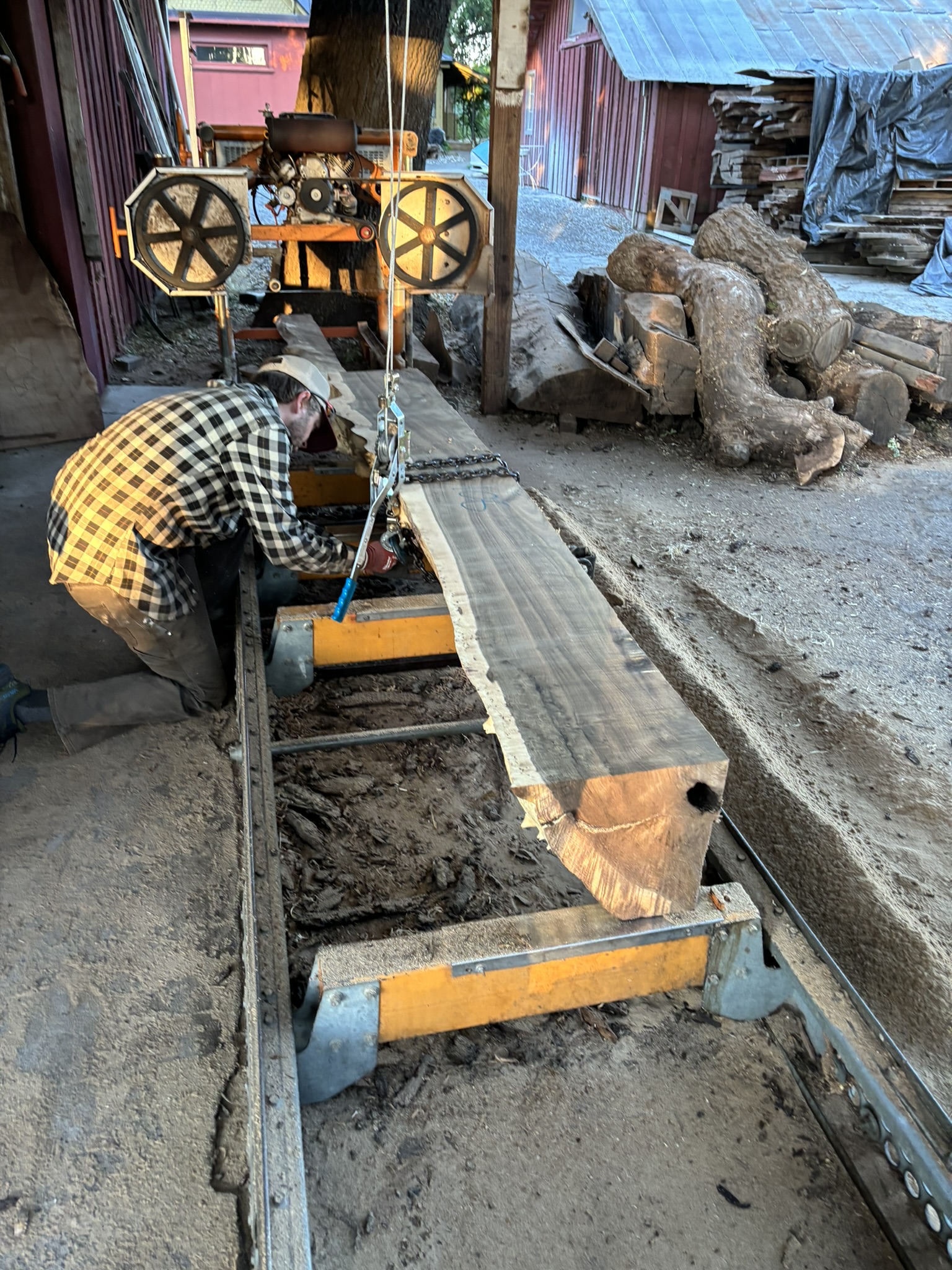
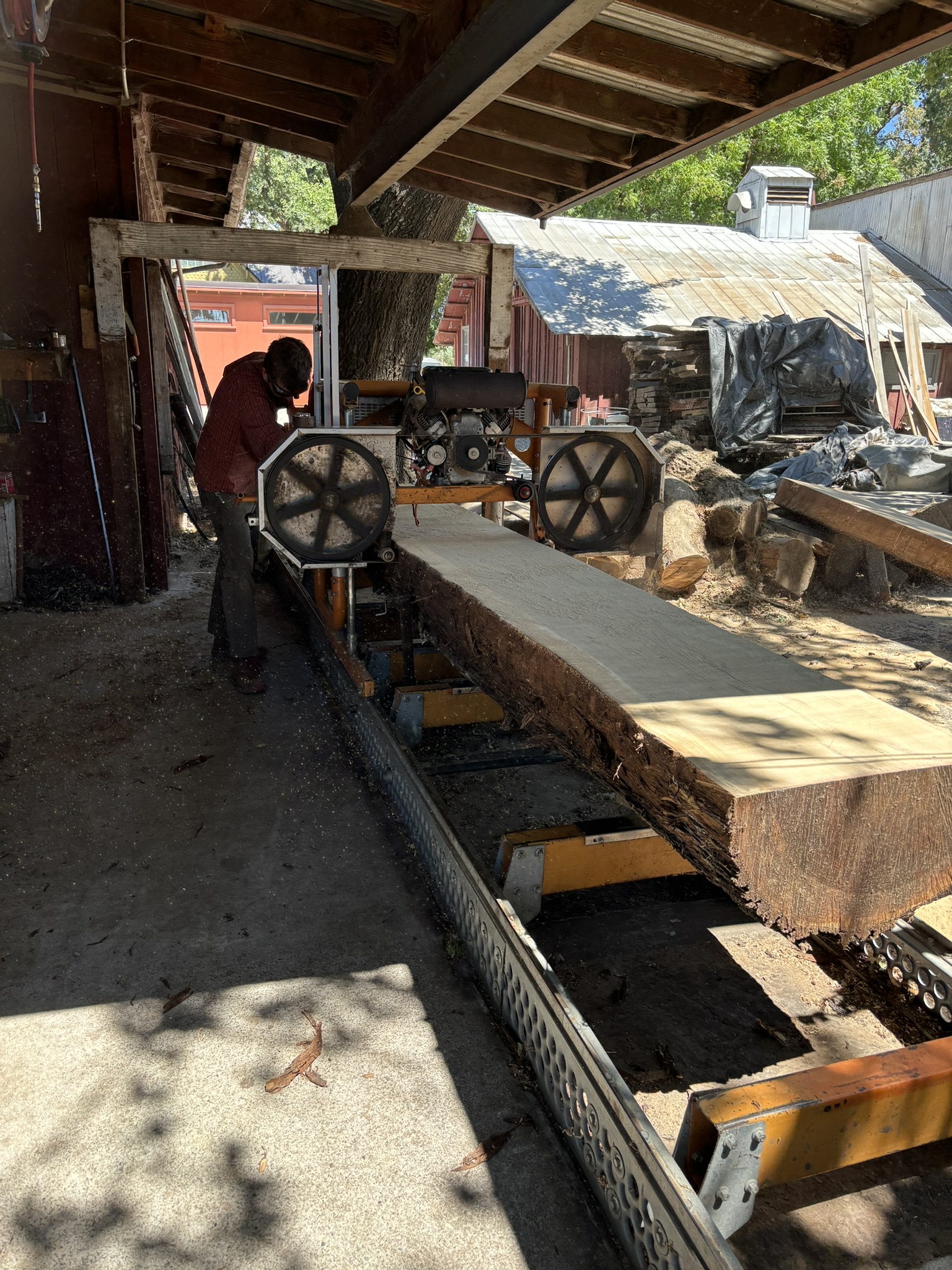
The logs are milled at a sawmill in Zamora, CA — cut into 8/4, 6/4, or 4/4 boards depending on how they'll be used. Each board is labeled, measured, and waxed on the ends to slow moisture loss, then stacked with stickers between layers so air can circulate freely through the pile.
After milling, the lumber is left to air dry for approximately one year. This phase is unhurried — the wood slowly releases moisture on its own terms, reducing stress in the boards and setting the stage for a stable final product.
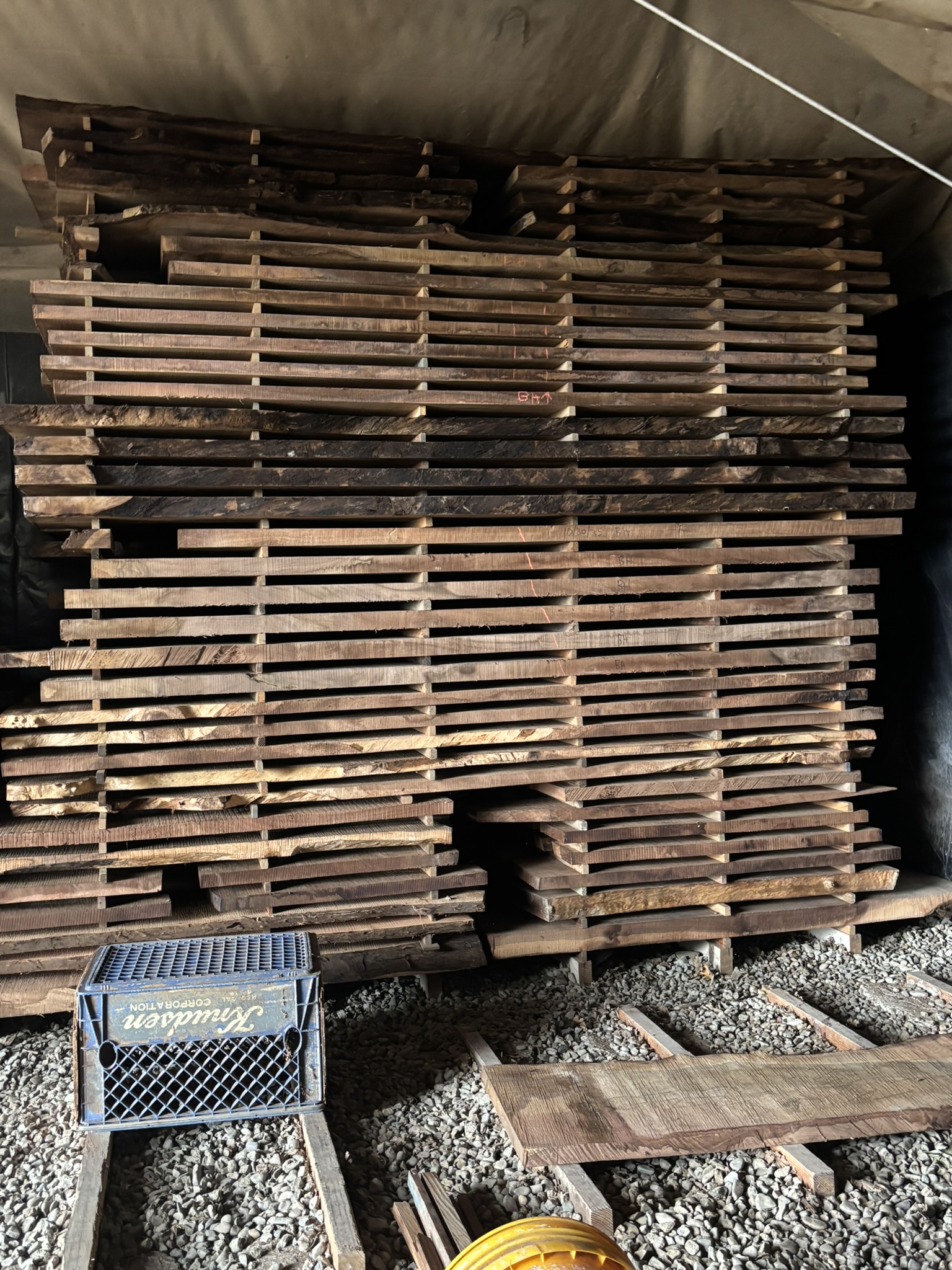
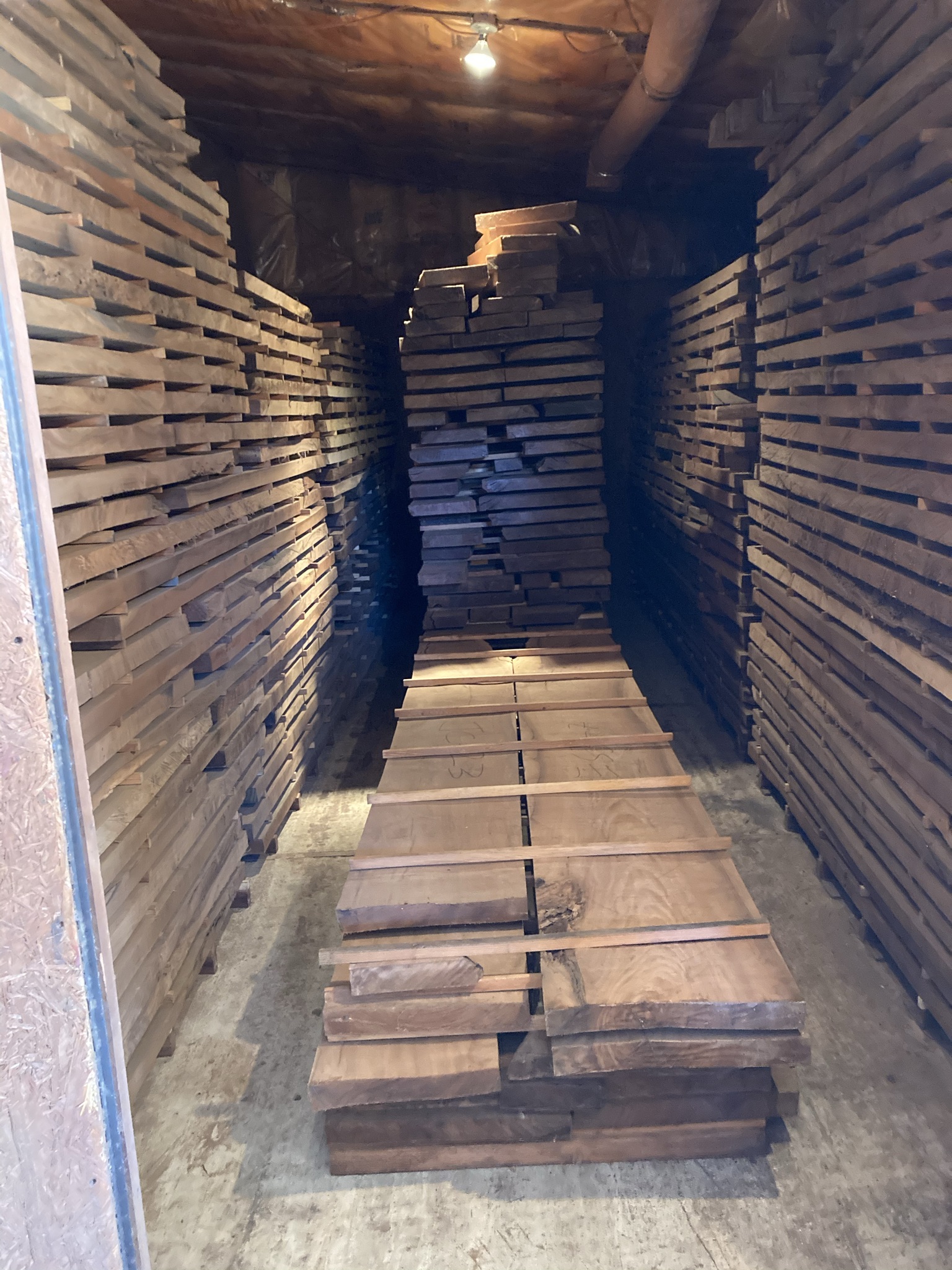
The thicker boards go into a low-temperature kiln for final drying. Commercial kilns run hot and fast, which can strip walnut of its depth and color. By drying slowly, we preserve the rich, warm tones that make California black walnut distinctive — tones that no stain can replicate.
When the kiln is unloaded, the boards are reassembled in the order and orientation they came from in the log. This makes it possible to work with matched pairs and to maintain consistent color and grain patterns across an entire piece of furniture.